Working Group on Gulf Foreign Policy: Meeting IV – Key Takeaways
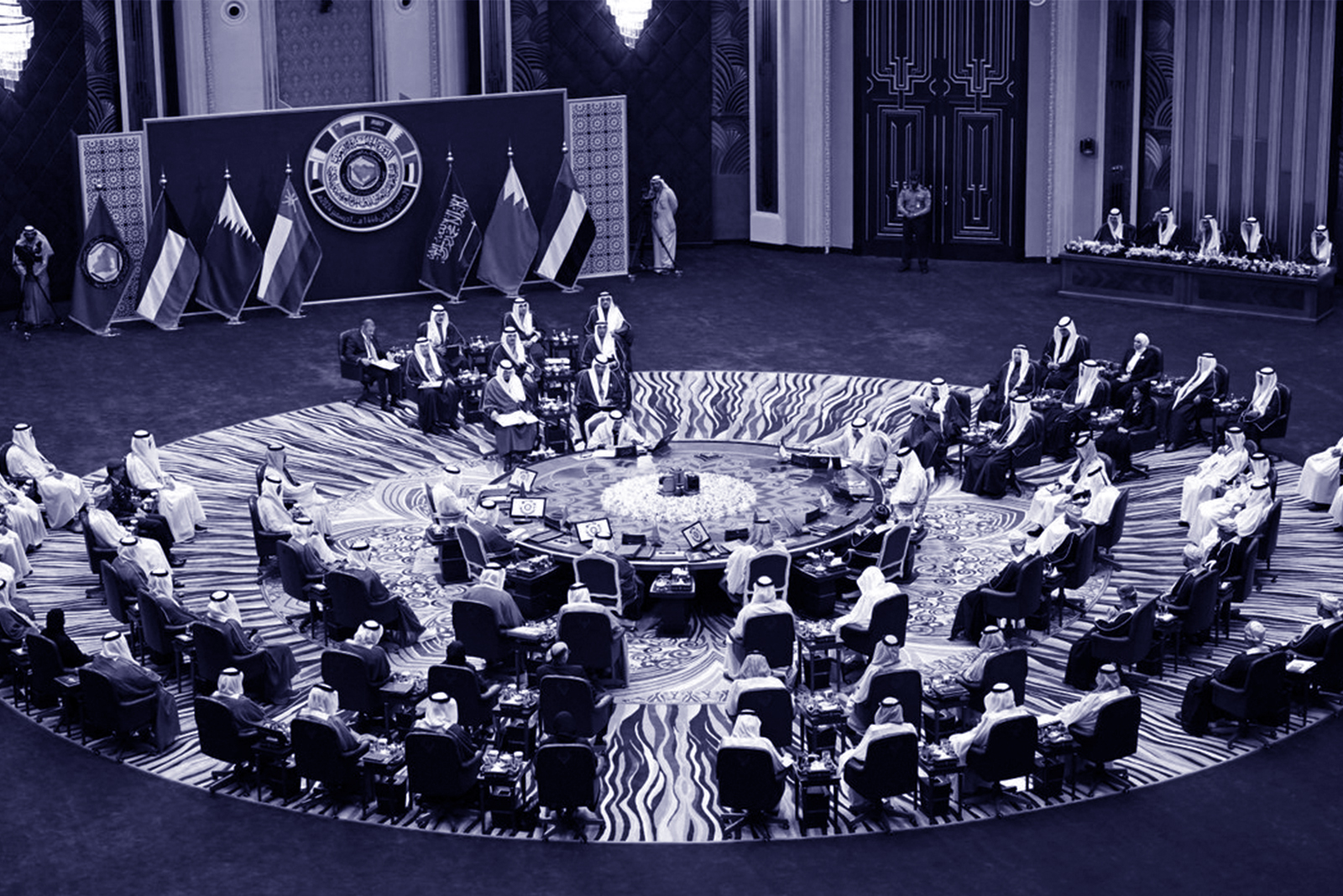
Fiker Institute’s Working Group on Gulf Foreign Policy held its fourth meeting and discussed the announcement of MOU between Iran and the US and its implication for regional security.

The Syllabus of Proposed Works is a non-exhaustive list of novels, plays, academic articles, podcast episodes, films, and visual artworks that speak to ongoing debates of identity and conflict as they relate to Arab Gulf states. It is designed to encourage dialogue and facilitate critical discourse in the context of ongoing developments in the region. […]

Fiker Institute’s Working Group on Gulf Foreign Policy held its third meeting and discussed prospects for a negotiated settlement of the crisis.

Fiker Institute hosted the Director General of b’huth (Dubai Public Policy Research Centre) Mohammed Baharoon and Associate Professor of Political Science at NYU Abu Dhabi Adam Ramey to discuss what is at stake for Gulf security, shifting alliances, and the broader balance of power.

Fiker Institute hosted the President of the Observer Research Foundation Dr Samir Saran to discuss the wide-ranging economic, energy, and diplomatic implications of the Iran War.

Fiker Institute hosted Senior Fellow Shurouq Jaradat for a lecture on fragmentation in the United Nations Security Council (UNSC). The lecture explored how the war in Ukraine has intensified tensions among the United Nations Security Council Permanent Five (P5) and how shifts in US policy under President Trump, particularly regarding Russia and Ukraine, have reshaped dynamics among the P5 and ultimately affected coordination with European allies.

Fiker Institute hosted Sarah El-Abd, PhD candidate in political science and international relations at Sciences Po, Paris for a lecture on competing approaches in humanitarian policies, exploring how a single institutional ecosystem engages with multiple humanitarian and political mandates.

Fiker Institute’s Working Group on Gulf Foreign Policy held its second meeting and discussed the implications of the ceasefire announcements and the ongoing Strait of Hormuz crisis.

As part of its Al-Khaleej Program, Fiker Institute launched the Working Group on Gulf Foreign Policy in March 2026 in response to the ongoing Iran War. The Group seeks to establish a coordination mechanism that convenes expert voices from the six GCC countries to exchange views on the current developments and the future policy trajectories of the GCC states.