Working Group on Gulf Foreign Policy: Meeting II – Key Takeaways
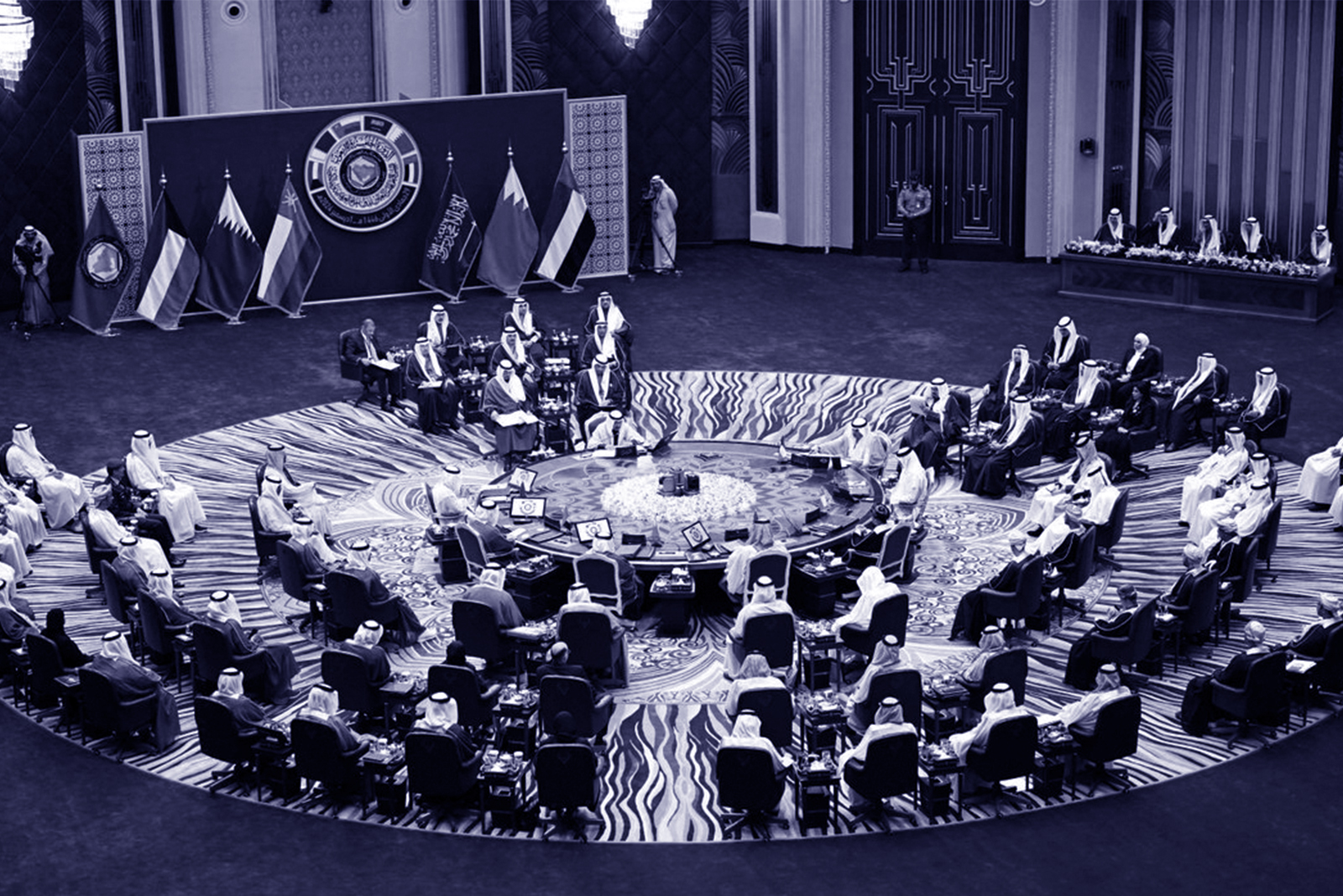
Fiker Institute’s Working Group on Gulf Foreign Policy held its second meeting on 8 April 2026, bringing together expert voices from the six Gulf Cooperation Council (GCC) countries to exchange views on the current developments and the future trajectories of GCC states’ foreign policies.
The takeaways below are a summary of the discussions and reflect multiple perspectives. They are not a unified view of all participants and do not represent Fiker Institute.
KEY TAKEAWAYS
On the ceasefire announcement & mediation efforts
Following the announcement of the two-week ceasefire between Iran and the United States (US), many components of the agreed-upon arrangement remain unclear. Rather than constituting a meaningful de-escalation or resolution of the conflict, the ceasefire appears to be a temporary truce, one that has provided welcome relief but also carries strategic costs. It has altered the geopolitical calculus in the region, with Iran emerging more emboldened, while Arab Gulf states have been largely marginalized from the mediation process. Meanwhile, Iranian attacks on the Arab Gulf states since the announcement of the ceasefire underscore the fragile nature of the arrangement.
How long the ceasefire holds will be crucial in determining the immediate trajectory of the conflict. While some working group members argued that it is in both parties’ interest to respect the ceasefire, others were doubtful given its structural vulnerability. There are several aspects that threaten the stability of the truce, including the vagueness of the ceasefire’s terms, differences in the parties’ understanding of key issues like the opening of the Strait of Hormuz, and disagreements over its scope. Notably, neither Lebanon nor the Gulf states are explicitly included in the ceasefire.
For the US, a key incentive appears to have been driven by economic considerations and domestic political pressures, particularly in light of congressional votes on additional funding for the Pentagon and the upcoming midterm elections. Moreover, it remains uncertain whether Israel will adhere to the terms of the ceasefire or act as a spoiler. For the Arab Gulf states, it is notable that they were not directly involved in the Pakistan-mediated talks that led to the truce, and that the ceasefire does not include any form of security guarantees for them.
On medium- to long-term escalation risks
For the longer term, a durable resolution to the conflict remains elusive, given the opposing interests of the parties and the absence of a broader political framework. Any de-escalation is unlikely to be linear. Throughout the war, military signaling and diplomacy have been used in parallel, with escalation utilized to gain leverage in negotiations. Such maneuvering increases the risk of miscalculation. The current ceasefire is likely to bring about a new phase of the war rather than definitively ending it.
The working group discussed a range of escalation scenarios following the expiry of the two-week deadline. As the conflict has evolved into a war of attrition, the ceasefire introduces a new operational logic. Whether the US will resume direct engagement after the ceasefire lapses will depend on whether the Trump administration assesses continued military pressure as strategically necessary in this next phase. Similarly, Iran’s posture will be shaped by its evolving strategic calculus, which appears to be framed largely in economic terms, with particular emphasis on sanctions relief and the extraction of transit-related revenues in the Strait.
The current state of the Iranian regime was also discussed, with some arguing that while Iran has faced important losses to its political and military leadership and significant damage to its infrastructure, the regime remains intact and emerged even more radical, having proven its control over the Strait. Its missile and drone infrastructure has enabled it to continue attacks throughout the war. Others argued that the regime will face jarring domestic realities once the existential threat of war subsides, as gains in the Strait of Hormuz would not necessarily translate into gains for people on the ground.
Another key risk that was discussed was the possibility of a long-term, low-intensity conflict. While such a scenario may help reduce immediate casualties, it would continue to carry significant implications for Gulf economies. Sustained uncertainty under a low-intensity conflict would further complicate efforts toward stable and durable financial and economic recovery.
On risks & opportunities for the GCC
The risk of marginalizing the Gulf states was highlighted. The Trump administration did not consider the security risks on the Arab Gulf states in the lead-up to the war, and has shown no clear indication of substantively including them in ongoing negotiations. Gulf states have sought to contain escalation and preserve space for de-escalation, even in the absence of an overtly coordinated position. This posture of restraint may be understood not as passivity, but as a strategic approach aimed at limiting escalation risks and avoiding significantly higher economic and infrastructural costs. However, in the absence of direct Gulf participation in mediation efforts, it remains uncertain whether the US can deliver a durable regional security framework, as opposed to a temporary pause preceding renewed rounds of conflict.
The group further examined whether a premature US withdrawal from the conflict could catalyze more substantive intra-GCC cooperation on defense. While any retrenchment by the US is likely to be gradual rather than immediate, it would nonetheless prompt significant recalibrations in the defense postures of Gulf states.
Although the need for a coordinated Gulf security framework under such conditions was emphasized, structural constraints remain. Divergent threat perceptions, varying thresholds for escalation, and differing conceptions of an acceptable end state to the conflict continue to complicate prospects for unified action. In parallel, the lack of alignment in the GCC states’ economic visions raises additional questions regarding the feasibility of a coherent, joint defense doctrine. The discussion also highlighted disparities in how Gulf states assess regional threats, including consideration of a dual-containment approach aimed at mitigating risks emanating from both Iran and Israel.
While comprehensive cooperation among GCC states remains uncertain, the current hostilities have created a window of opportunity for greater alignment on shared threats and systemic vulnerabilities. The group explored multiple avenues for sectoral cooperation, spanning both normative principles and technical coordination. At the strategic level, there is scope for the bloc to articulate a unified position on core interests, including freedom of navigation and the imperative of de-escalation. At the operational level, cooperation may advance in areas of shared exposure without infringing upon national sovereignty, particularly in food, energy, and water security, through mechanisms such as coordinated contingency planning and joint emergency reserves.
On the control of the Strait of Hormuz
A key sticking point to any durable resolution is the obstruction of the Strait of Hormuz. The war has emboldened Iran’s instrumentalization of the Strait as a means of coercion against regional and international actors, and it could do so again in any future conflict. Iran’s approach to the Strait appears to be less about establishing exclusive control, and more about expanding its capacity to exert leverage over a critical glob al chokepoint. This position not only heightens the risk of future escalation but also reinforces the urgency of establishing credible mechanisms to safeguard maritime security and ensure the uninterrupted flow of commerce through the Strait.
The ceasefire announcement, as it relates to the Strait, offers little clarity, and there are differing positions between the US and Iran on what would constitute an open ing of the Strait. Notably, it is unclear whether there would be any tolerance for Iran imposing tolls on shipping passing through Hormuz. So far, Iran has also been able leverage its control for financial gain, with plans to use tolls on maritime passages for reconstruction. Possible alternatives were raised in the discussion, including a temporary mechanism controlled by the United Nations. However, undermining the principle of freedom of navigation in the Strait of Hormuz could set a precedent for other key chokepoints like Bab al-Mandeb, the Taiwan Strait, the Strait of Malacca or Gibraltar.
Freedom of navigation in the Strait of Hormuz is a global humanitarian concern with major impacts on the international economy and should not be politicized. The oil shock resulting from the closure has come at a sensitive time for much of the world, with Europe, for example, dealing with energy supply disruptions due to the Russia-Ukraine war, while much of Asia has been hit hard by supply shortages.
The Arab Gulf states have different options, but they would require coordinated action. Some members raised the possibility that GCC states could insist on upholding freedom of navigation in the Strait of Hormuz and refuse to pay any fees to import or export through that waterway. However, this would come at a significant economic cost which states – in the region and beyond – might not be equally willing to bear. Oman’s position will be key given Iranian proposals for joint levies on shipping through the Strait.
While there are possible alternatives to Hormuz, like overland pipelines, there are technical and safety constraints to how much these can be expanded, and it does not appear they can replace the Strait itself. It is thus important to diversify infrastructure while considering the different sources of risk. However, there is no common vision among the GCC states for such alternative corridors. For countries like the UAE and Saudi Arabia, the ports of Fujairah and Jeddah respectively offer shipping routes that bypass the Strait. For Qatar and Kuwait, the Strait remains the only option for energy exports. At the same time, seeking alternative trade routes could mean ceding control of the Strait to Iran.
On the multilateral response & implications for the global order
President’s Trump’s ceasefire came hours after the international community, through the UN Security Council (UNSC), was unable to adopt a resolution introduced by Bahrain aimed at collective defensive coordination to secure safe navigation through the Strait of Hormuz. The resolution was vetoed by China and Russia, while Pakistan, who negotiated the ceasefire, and Colombia abstained, reflecting a lack of consensus among Council members.
The group discussed China’s stance, highlighting its objection to the language of the resolution which Beijing argues legitimizes the US and Israel’s initial attacks on Iran. Some members pointed to how the vote on the resolution turned into a polarizing issue between China, Russia, and the US. Some posited that Pakistan’s abstention and Russia and China’s vetoes indicate that UNSC members knew talks were ongoing and preferred to see their outcome before passing the resolution.
The group also addressed the implications of failing to pass the resolution for international law, with some arguing that it was a missed opportunity to signal multilateral support for key international legal principles. The voting pattern in the Council reflected a broader fragmentation in the international response to the war and of the multipolar world order more broadly. While there is wide support for de-escalation, there is less alignment on a shared strategic vision, particularly in how regional security concerns are explicitly framed and responded to.
PARTICIPANTS
The second Working Group meeting was attended by:
- Abdulla Mohamed Al Ahmed (Bahrain), Derasat
- Ahmed Buhejji (Bahrain), First Secretary at Ministry of Foreign Affairs of Bahrain & Al-Khaleej Fellow at Fiker Institute
- Aisha Al-Sarihi (Oman), Nonresident Fellow at the Middle East Council on Global Affairs & the Arab Gulf States Institute
- Dubai Abulhoul (UAE), Founder of Fiker Institute
- Dr Khalid Al-Jufairi (Qatar), Adjunct Associate Professor at Georgetown University in Qatar & Al-Khaleej Fellow at Fiker Institute
- Mohammed Baharoon (UAE), Director General of b’huth – Dubai Public Policy Research Center
- Mahdi Jasim Ghuloom (Bahrain), Junior Fellow in Geopolitics at the Observer Research Foundation – Middle East
- Dr Naser Alsayed (Bahrain), Queen Elizabeth II Academy Fellow at Chatham House
- Nayef Al-Nabet (Qatar), Nonresident Fellow at the Middle East Council on Global Affairs
- Dr Nourah Shuaibi (Kuwait), Assistant Professor at Kuwait University
- Rumaitha Al Busaidi (Oman), Vice President of the Environment Society of Oman & Al-Khaleej Fellow at Fiker Institute
- Sultan Sooud Al-Qassemi (UAE), Founder of Barjeel Art Foundation
The statements made and views expressed do not represent Fiker Institute.