Global climate debates have sparked concerns about the stability of food, water, and ecological systems, as shifts in energy supplies bring with them substantial financial and social costs. Amid increasing multilateral paralysis, pressures from domestic politics, and corporate interests, international momentum on climate action risks stalling. While the world gathers every year around COP, effective progress remains limited, especially around issues of justice and accountability. Tensions between technological development and environmental protection are growing amidst an exponential increase in energy demands, further straining natural resources and triggering tensions within or between countries. What are the social, economic, and geopolitical implications of how states respond to differing climate crises? Fiker Institute’s Climate Security Program seeks to explore the nexus between climate and conflict, which places it at the center of national security concerns as the environment becomes both a casualty and a tool of war.
COP30: What to Expect

COP30: What to Expect

In November 2025, Brazil will host COP30, the annual UN climate conference. International climate governance has witnessed uneven progress in recent years, with North-South tensions and geopolitical instability threatening vital action against deteriorating climate conditions. What can we expect from Brazil’s COP and how does the summit highlight deeper problems in global climate governance?

Yasmeen Jaber
America’s Climate Finance Exodus: What It Means For Africa

America’s Climate Finance Exodus: What It Means For Africa

On January 20, 2025, President Donald Trump upended years of climate finance commitments to Africa. The US President issued an executive order withdrawing the US from the Paris Agreement and rescinding the US International Climate Finance Plan. This did not come as a surprise as it is the second time President Trump has withdrawn from the Paris Agreement. […]

Amid increasing global fragmentation and the deterioration of multilateral cooperation, there is growing skepticism about the current structures of global governance. International decision-making bodies are deadlocked, norms and laws are being eroded, and traditional aid and development models are under pressure from funding cuts. At the same time, emerging powers are increasingly challenging the status quo. Global South-led institutions like BRICS+ are exerting growing influence in international politics, and minilateral frameworks are gaining traction, signaling a multipolar shift. Additionally, emerging frontiers in AI, space exploration, and digital governance are pushing the boundaries of existing systems. Fiker Institute’s Diplomacy & Global Governance Program aims to propose alternative models for multilateral cooperation and to advance policy recommendations on effective reform strategies. How can existing institutions be rethought and adapted, and how can global leadership become more inclusive, credible, and representative?
Fractures and Alignments: Europe at the UN Security Council

Fractures and Alignments: Europe at the UN Security Council

Fiker Institute hosted Senior Fellow Shurouq Jaradat for a lecture on fragmentation in the United Nations Security Council (UNSC). The lecture explored how the war in Ukraine has intensified tensions among the United Nations Security Council Permanent Five (P5) and how shifts in US policy under President Trump, particularly regarding Russia and Ukraine, have reshaped dynamics among the P5 and ultimately affected coordination with European allies.

Gulf Foreign Policy Amid Escalation & Alliances

Gulf Foreign Policy Amid Escalation & Alliances

The US and Israel’s strikes against Iran since February 28 mark a pivotal moment in the Gulf’s security architecture. They transformed what had previously been a gradual recalibration of alliances into an immediate strategic dilemma for the GCC states. Iran’s direct attacks targeting Gulf territory and infrastructure exposed the double-edged nature of hosting US military assets, which […]

Despite advances in recent years, women’s equality still faces significant challenges across regions. In conflict and post-conflict situations, women’s roles as peacemakers, mediators, and combatants are often overlooked, hampering adequate approaches to protection, demobilization, and post-conflict reconciliation. Historically, women have been sidelined from political negotiations and power-sharing agreements, despite playing crucial roles in movements, mobilizations, and civic engagements. While gender-sensitive provisions have been incorporated in political processes, justice mechanisms remain inconsistent. In the labor market, women’s contributions in informal economies are often not adequately recognized, resulting in their exclusion from social, political, and legal protections. The debate on gender equality is frequently shaped by Western-centric critiques that disregard the agency and choices of women on whose behalf they claim to speak. Fiker Institute’s Gender Equality Program aims to study how gender roles are understood in different regional contexts and how they are shaped by intersectional factors, including race, class, and geographic status. It works to analyze the rights, challenges, and agencies of women in evolving labor markets, conflict settings, and political transitions.
On Asmahan Elfergani: Within the Margins of History

On Asmahan Elfergani: Within the Margins of History

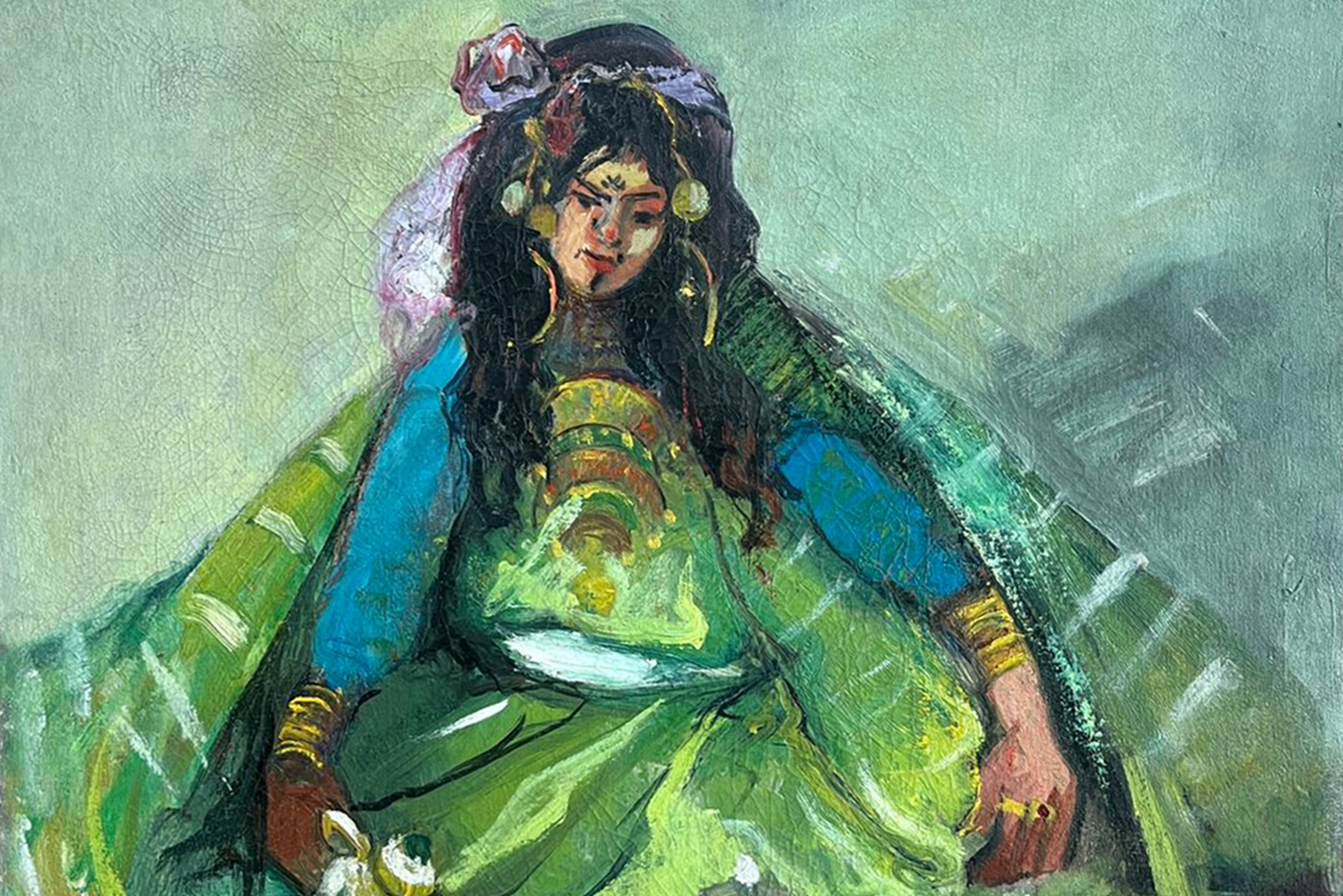
Libyan artist Asmahan Elfergani’s work is largely absent from the formal record of art history, but she is remembered in oral histories and private collections. This Essay seeks to establish a preliminary biography of the artist and her work as it endures through homes, conversations, and the quiet persistence of remembrance.

Lubna Rages
On Afaf Zurayk: The Supremacy of Light & Silence

On Afaf Zurayk: The Supremacy of Light & Silence

Afaf Zurayk is one of the last figures of a generation of prominent Lebanese women artists who emerged in the 1960s–70s, when Beirut was an epicenter of art and creativity. Zurayk’s work and the artist’s life is a testament to resilience and the power of art in the face of adversity.

Nicole Hamouche
Writing War, Writing Life: Examining Arab Women’s Autobiographical Narratives

Writing War, Writing Life: Examining Arab Women’s Autobiographical Narratives

Since the second half of the 20th century, the Arab region has witnessed pivotal and transformative political events that have shaped its modern history. Arab(ic) autobiographical literature has flourished in these contexts. A plethora of these texts have been written by women. This Essay aims to present a brief history of Arab women writing about their experiences of war and political upheavals in autobiographical texts.