Who Needs the Security Council? Legal, Economic, and Coalition-Based Alternatives
INTRODUCTION
On 17 November 2025, the United Nations Security Council (UNSC) accepted an unprecedented arrangement: a United States (US)-led Board of Peace, to serve as “a transitional administration with international legal personality,”1 to oversee the reconstruction of the Gaza Strip. It was the first time the UNSC endorsed an entity with significant ambiguity about its mandate, governance, and legal basis. This move was remarkable not just for what it created, but for what it revealed.
The fact that no member blocked it suggests a growing acceptance of alternative governance structures that function alongside, and sometimes outside, the Council’s traditional multilateral framework. It also signals a clear shift in which geopolitical influence is gradually outweighing multilateral legitimacy within the UNSC.
This Essay argues that the Council has become a theater for political positioning rather than a body capable of addressing global crises and serious violations of international law. It explains how the Ukraine War marked a major turning point, deepening the paralysis of the UNSC to unprecedented levels and accelerating the rise of legal, economic, and coalition-based alternatives. It highlights not only the benefits but also the risks of seeking such alternatives. As the current global order undergoes a major transition, substantial UNSC reforms are necessary to remain relevant and to avoid further fragmentation in the international system.
THE UNSC’S GROWING PARALYSIS
Under the UN Charter, the UNSC bears the “primary responsibility for the maintenance of international peace and security.”2 In addition to seeking the peaceful settlement of disputes, the Council can use enforcement measures to fulfill its mandate, such as imposing sanctions or, when necessary, authorizing the use of force.
Historically, the UNSC has at times acted decisively in major crises, including authorizing the use of force during the Korean War3 and the invasion of Kuwait in 1990.4 It has established and overseen more than 70 peacekeeping missions worldwide,5 eleven of which remain active today.6 Despite notable failures, such as preventing the genocide in Rwanda, UN peacekeeping operations contributed to stabilizing fragile environments, supporting political transitions, and reducing levels of violence and human rights abuses. The UNSC has also been successful in imposing effective measures to address terrorism, and acknowledged the role of climate, youth, and women in peace and security. Even with sometimes intense political divisions, the Council has been able to act. For example, it authorized a cross-border humanitarian mechanism during the Syrian war to deliver aid without the Syrian government’s consent.7
However, the UNSC’s capacity to resolve major threats to international peace and security has diminished over time. The Ukraine War in 2022 marked a turning point, as the Council has been largely paralyzed by vetoes, with divisions among the permanent five members (P5) spilling over to almost every other issue on the agenda. The UNSC’s paralysis is particularly evident in its limited action and the absence of UN-led mediation efforts to address the ongoing war in the Middle East since February 28, which is having far-reaching consequences on global peace, security, and the international economy.
The P5’s use of their veto power had declined sharply since the Cold War, but it began rising again around 2011, mainly over the Palestine and Syria files.8 Yet the use of veto had remained largely predictable until 2022, when it was used more often and on issues beyond Ukraine, such as Mali, North Korea, and the arms race in outer space.9 In 2024, veto use spiked, blocking the adoption of seven draft resolutions, the highest number since 1986.10 This suggests that the Council is facing a level of political stalemate and geopolitical polarization comparable to that of the Cold War era. This is also evident in the significant decline in the rate of unanimously adopted resolutions from 84% between 2014 and 2023 to 61.4% in 2025.11 Council members are becoming increasingly unwilling to compromise or act collectively, even on technical or humanitarian texts that would previously have passed with broad support. This resulted in a significant drop in the number of resolutions passed from 57 in 2021 to 44 in 2025, the lowest since 1991.12 Other UNSC output also declined, including presidential texts, letters, and statements, which are often used as alternatives when there is no consensus on resolutions.
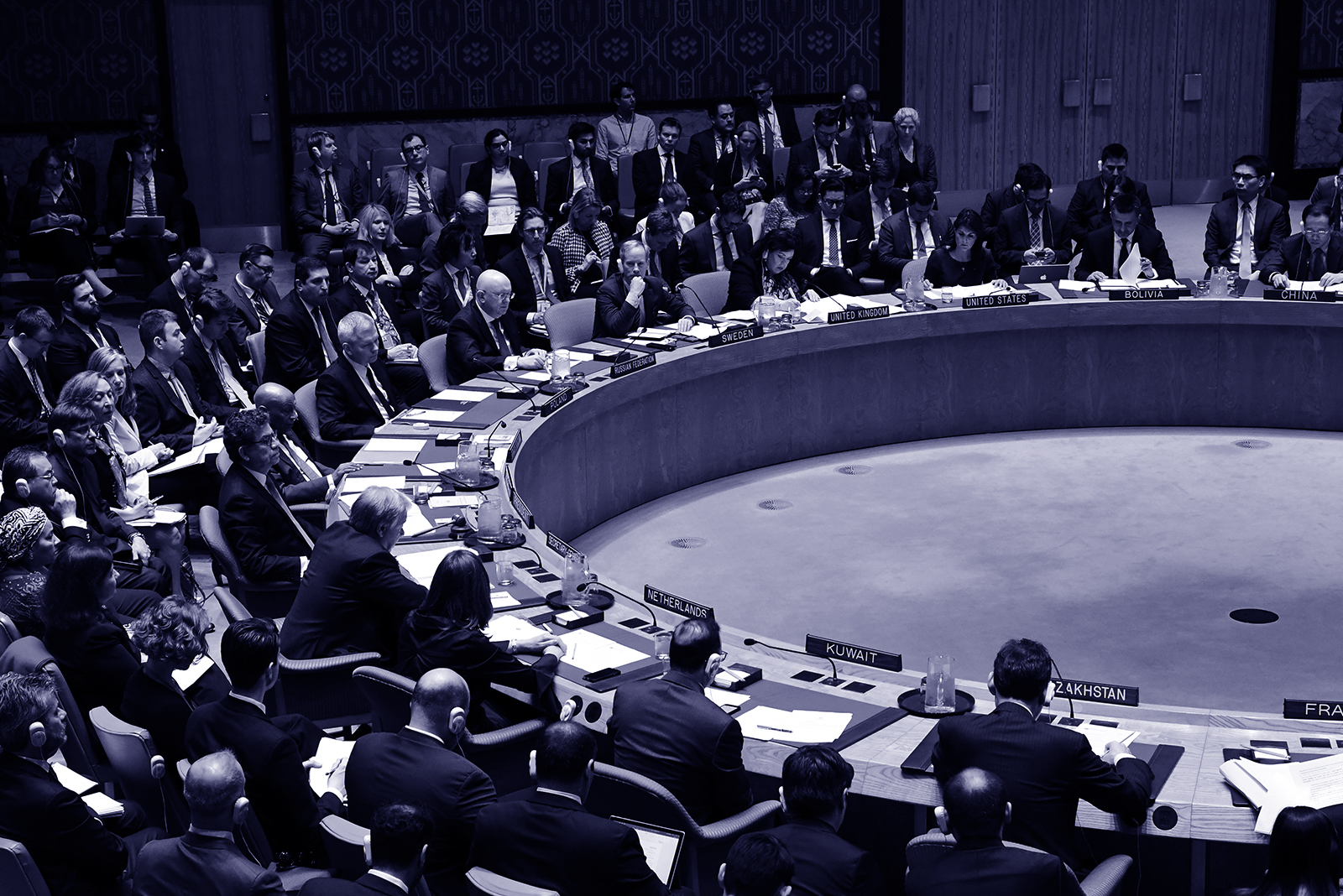
Disagreements quickly spread beyond policy discussions, turning the UNSC’s working methods into a battlefield. In 2020 and 2021, procedural votes determining how the Council works were rare or non-existent, but they spiked to eight in 2024, the highest number on record.13 At the same time, the UNSC’s formal meetings reached a record high in 2024.14 This indicates that the UNSC remained highly active but increasingly unable to translate its engagement into tangible outcomes. The UNSC has increasingly become a platform for political positioning rather than a body focused on resolving conflicts.
The UNSC remains necessary for upholding a rules-based world order, but it is no longer sufficient on its own. Its authority is now selective, employed by major powers when it serves their strategic interests and ignored when it does not. For less powerful states, the UNSC remains vital, even though it often falls short of achieving meaningful action. As a result, many countries are increasingly exploring alternative legal, economic, and coalition-based solutions beyond the UNSC.
LEGAL ALTERNATIVES
With the UNSC’s paralysis, member states have increasingly turned to other legal bodies and mechanisms, including the UN General Assembly (UNGA), the International Court of Justice (ICJ), the International Criminal Court (ICC), and even domestic jurisdictions.
The UNGA has long served as an alternative source of moral and international legitimacy when the UNSC fails to act. As early as 1950, after the Soviet Union blocked UNSC action on North Korea’s invasion of South Korea, the US led the adoption of the “Uniting for Peace” resolution.15 It established a mechanism that allows the UNGA to convene an Emergency Special Session when the UNSC is unable to exercise its primary responsibility due to a lack of unanimity among its members. Over the decades, this mechanism has been invoked repeatedly, particularly in relation to Palestine. More recently, and for the first time in decades, the UNSC in 2022 referred the war in Ukraine to the UNGA after Russia vetoed a draft resolution, an acknowledgment of the Council’s paralysis.16 While UNGA resolutions are not legally binding like UNSC decisions, they nevertheless carry political weight.
The ICJ, the UN’s principal judicial organ, has also gained greater visibility when the UNSC has failed to act decisively, even though it was designed to complement, not replace, the Council. For example, it issued provisional measures in the Gaza genocide case17 and an advisory opinion on states’ climate change obligations.18 However, although its rulings are binding on the parties, the Court lacks its own enforcement tools and relies instead on states to comply or on the UNSC to pass binding resolutions on the matter. This means that the ICJ’s influence is primarily legal and does not yield enforceable outcomes on the ground. Notably, the Court’s provisional measures in the Gaza genocide case were not implemented by Israel nor enforced by the UNSC. Yet the Court’s decision provided a legal basis for countries and institutions to impose targeted sanctions on Israeli individuals and enti ties and built momentum for some governments to recognize the State of Palestine.
The ICC offers another legal route for seeking justice and accountability for genocide, crimes against humanity, and war crimes. Created under the Rome Statute, it is the first permanent international criminal tribunal of its kind. It has issued arrest warrants for Russian President Vladimir Putin in connection with the war in Ukraine19 and for officials related to the Gaza conflict, including Israeli Prime Minister Benjamin Netanyahu.20 While this strengthened the international legal framework surrounding these conflicts, enforcement relies on the cooperation of states parties to the Rome Statute.
Finally, states increasingly rely on domestic laws to pursue accountability when multilateral mechanisms fail. While sometimes necessary and impactful, domestic measures carry risks, as they are not always grounded in international law and may reflect national interests, leading to selectivity and fragmentation in the application of justice.
The limited enforcement of UNGA resolutions, ICJ judgments, and ICC actions reveal a structural imbalance in the global order. Although these organizations can hold states and individuals politically, legally, and criminally accountable, enforcement is left to the UNSC, where rulings are often selectively applied or obstructed for geopolitical reasons. However, responsibility does not rest solely with the UNSC. Broader national implementation of UNGA resolutions, ICJ rulings, and ICC obligations by UN member states could generate significant political and diplomatic pressure. Framing the Security Council as the sole obstacle risks overlooking the wider responsibility of states that choose not to act.
ECONOMIC ALTERNATIVES
As political consensus within the UNSC diminishes, countries are increasingly turning to economic tools to exert pressure on states or parties that violate international law. Historically, economic sanctions have succeeded in applying political pressure in some cases, like in apartheid South Africa. Yet their effectiveness is debated, especially when they worsen humanitarian crises, contribute to corruption and black markets, or are driven by narrow political agendas. Since 1966, the UNSC has established over 31 sanctions regimes targeting states such as North Korea, Sudan, Mali, and Haiti, in addition to terrorist organizations such as Al-Qaeda and ISIS.21 However, the Council has failed to impose such measures in other contexts, including Russia and Israel, reflecting a clear double standard.
This has not prevented states, regional actors, and grassroots campaigns from acting independently. After Russia’s full-scale invasion of Ukraine, the European Union (EU) and other nations imposed unilateral sanctions on Russia outside the UNSC, including asset freezes and trade restrictions.22 The Economic Community of West African States (ECOWAS) has previously also imposed sanctions on its member states following unconstitutional changes of government. Other forms of economic pressure have also emerged, such as grassroots boycott campaigns that have targeted Israeli products and multinational businesses linked to the Israeli occupation of Palestine. Although these measures have led to profit declines and reputational harm to major companies such as Starbucks, PepsiCo, and McDonald’s,23 their effectiveness remains limited without broader multilateral cooperation.
At the institutional level, BRICS+ exemplifies the gradual emergence of geopolitical and economic alternatives within the international system. Although it is not a direct substitute for the UNSC, it aims to strengthen the Global South’s role in international governance and address long-standing imbalances in representation and decision-making. By creating financial instruments such as the New Development Bank and discussing trade in local currencies to reduce dependence on the US dollar, BRICS+ is building a parallel economic infrastructure. The growing economic weight of the BRICS+ bloc could enable its members to respond more independently, whether through alternative development financing, trade realignments, or coordinated diplomatic pressure.
Yet the current war in the Middle East has exposed the limits of BRICS+ in addressing global crises, with little room to respond when some of its members, including Iran, are directly engaged in the conflict. If BRICS+ wants to lead in contexts where the UNSC is paralyzed, particularly in crises affecting the Global South, it needs to institutionalize conflict-resolution mechanisms and anchor them in international law, not in the bloc’s political interests.
COALITION-BASED ALTERNATIVES
Amid rising geopolitical polarization, countries are increasingly turning to smaller coalitions and bilateral deals to protect their interests and manage crises. These alternative frameworks allow for faster coordination and more flexible, issue-specific responses in an increasingly multipolar global order. Developments in recent years illustrate this ongoing trend. Following Russia’s full scale invasion of Ukraine, both Finland and Sweden abandoned their long-standing military neutrality and joined NATO.24 Additionally, rising security threats and doubts about relying on the US security guarantees, along with President Trump’s threats to annex Greenland, have sparked more serious debates across Europe about building a stronger regional security architecture.
The Middle East is also likely to witness major geopolitical realignments following the US-Israel-Iran war. Gulf States have started rethinking their security architecture and alliances with regional and international players. For example, Saudi Arabia, Qatar, and the United Arab Emirates (UAE) have recently signed new defense agreements with Ukraine.25 As the repercussions of this war continue to unfold, it is likely that other similar partnerships will emerge. The war has also prompted the UK and France to form a coalition of about 40 countries to explore options for reopening the Strait of Hormuz once the conflict is over.26
As early as the 1990s, after the genocides in Rwanda and Srebrenica, African countries recognized the need for their own security frameworks. The African Union (AU) established mechanisms for conflict prevention, peacekeeping, and crisis management, including the Common African Defence and Security Policy and the African Standby Force, to intervene in cases of atrocities. These regional bodies often operate alongside or independently of the UNSC and are increasingly important, especially in light of eroded trust in UN peacekeeping and Western security partnerships, notably in West Africa. For example, in 2023, Mali requested the withdrawal of the UN peacekeeping mission, MINUSMA.27 Several Sahel nations have also ended French military presence in their countries, expanded security ties with Russia, and formed new regional alliances, like the Alliance of Sahel States.
In Asia and the Pacific, concerns over sovereignty and territorial disputes have prompted several countries to strengthen their security partnerships rather than rely solely on the UNSC. In 2021, Australia, the US, and the UK formed the AUKUS trilateral security partnership to support peace in the Indo-Pacific. Such moves demonstrate that states are focusing on building targeted bilateral and multilateral relationships to enhance deterrence.
However, states moving away from fixed alliances and multilateral institutions toward more fluid, interest-driven alignments risk fragmentation of the global response to crises, and raise questions about consistency, legitimacy, and accountability.
RESTORING THE COUNCIL’S CREDIBILITY
At the core of this endeavor is restricting the use of the veto. Some legal scholars and member states argue that international law already limits the use of veto in cases involving serious violations of international law, such as war crimes, genocide, ethnic cleansing, or crimes against humanity.28 Article 41 of the International Law Commission’s Articles on State Responsibility says that states must not recognize or support situations resulting from serious breaches of peremptory norms of international law.29 In this view, when a P5 member uses its veto to prevent action to halt such violations, like the repeated vetoes on Gaza, it risks wrongfully maintaining an illegal status quo. While this interpretation of the veto power remains debated, it suggests that it cannot simply be treated in isolation from the broader rules of international law.
A related debate concerns the “obligatory abstention” rule in Article 27(3) of the UN Charter.30 Under this provision, if a UNSC member is a party to a dispute, it shall abstain from voting when the Council is acting under Chapter VI on the peaceful settlement of disputes. Although this article is largely disregarded in practice, a more rigorous application of this provision could help break deadlock in cases like the war in Ukraine. However, it has clear limits. It does not cover cases where UNSC members are heavily involved through financial or military support. Moreover, the abstention rule does not fix the deeper structural imbalance within the Council. Still, if combined with efforts to restrict the veto in situations involving serious violations of international law, it could offer a more realistic starting point for restoring some credibility and functionality to the UNSC.
CONCLUSION
Despite the UNSC’s failures to respond to major global crises, its existence remains vital to maintaining international peace and security. It serves as the main framework for states to address global security issues in line with international law and the principles of the UN Charter. Without it, or an equivalent legitimate multilateral structure, the risks of disorder and power-driven politics grow substantially.
While alternative legal, economic, and coalition-based or regional mechanisms can exert pressure and, at times, lead to significant change, they also contribute to a more divided world order and to the inconsistent application of international law. The shift toward decentralizing authority reflects a move toward interest-based arrangements that may not always align with international norms.
This is why it is crucial to revive the role of the UNSC and rebuild confidence in its ability to pursue justice and peace without selectivity or double standards. This requires meaningful reforms, such as expanding its permanent membership to better reflect current geopolitical and demographic realities, as well as limiting veto pow er, especially in cases of atrocities. The repeated calls for reforms can no longer be ignored. Revitalizing the UNSC is not just about maintaining a legitimate institution; it is essential to counteract the long-term fragmentation of the international system and to uphold a rules-based order that safeguards both states and their peoples.
The statements made and views expressed are solely the responsibility of the author, and do not represent Fiker Institute. To access the endnotes, download the PDF.