Regional Adaptability & Economic Development
ABOUT THE PARTNERSHIP
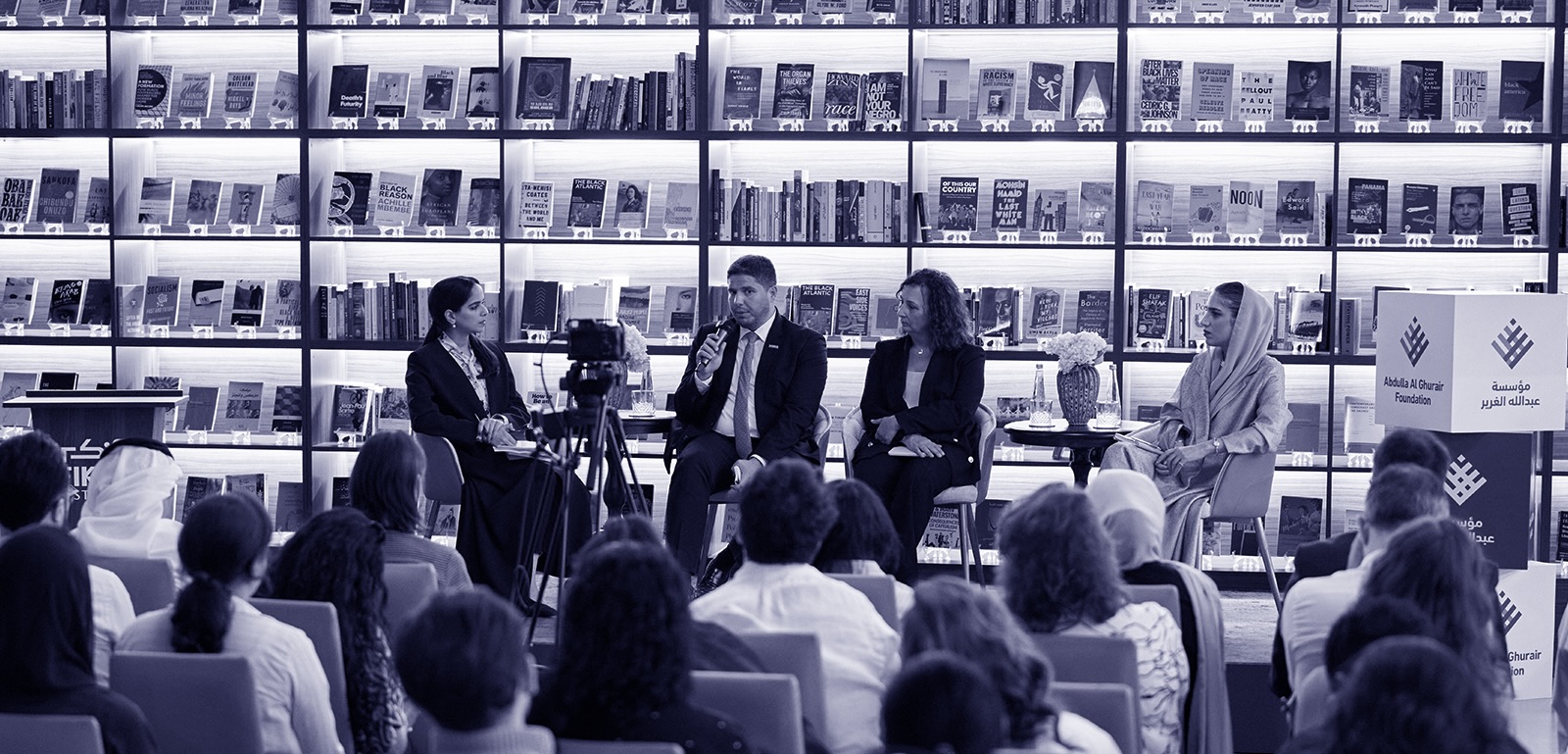
On October 3, 2026, Abdulla Al Ghurair Foundation (AGF) and Fiker Institute co-hosted a public panel discussion on “Regional Adaptability & Economic Development.” The convening is part of a joint, year-long thought leadership series between Fiker Institute and AGF under the theme of “Shaping Future Arab Development Priorities.” Launched in September 2026, the initiative aims to examine the region’s shifting needs across development sectors, with a particular focus on the role of philanthropic institutions and NGOs in building future-readiness frameworks. Each session will bring together regional experts to explore key challenges and opportunities, identify gaps, share models that work, and develop practical solutions.
ABOUT THE SESSION
The following outcomes report is based on the first session of the Quarterly Series between AGF and Fiker Institute. The panel featured Ruqayya Alblooshi, Executive Director for International Relations at the Prime Minister’s Office of the United Arab Emirates (UAE), Danah Dajani, Senior Vice President of External and Institutional Engagement at the Abdulla Al Ghurair Foundation, and Khaled Kabbara, UNHCR’s External Relations Officer for the UAE and Spokesperson of the Gulf Cooperation Council Countries.
Dr. Sonia Ben Jaafar, CEO of the Abdulla Al Ghurair Foundation, delivered the opening remarks. Dr. Ben Jaafar made the case that regional philanthropy must move beyond filling gaps to help reshape the architecture of how capital, knowledge, and opportunities reach the most vulnerable, ensuring that the perspectives of local communities are centered in global debates. Communities, including young people, should be more empowered and integrated from design to implementation, while building decision-making processes that are locally led. The report includes key takeaways from the three main themes discussed, followed by policy recommendations.
KEY DISCUSSION POINTS
Theme I: People First, Infrastructure Follows
Debates surrounding reconstruction in the region should not only focus on rebuilding infrastructure, but also on rebuilding opportunities for local communities as a central point of departure. In fact, governance models are only sustainable insofar as they build long-term capabilities. The real challenge lies in restoring trust, human capital, and sustainable governance. Stakeholders, from governments to the private and third sectors, should focus on avenues that would unlock a community’s potential as it relates to the unique context of the Arab Region, aligning on the common objective of putting people at the forefront of decision-making on development and economic expansion. This would require responders, including humanitarian organizations, to have open communication with the people on the ground that they aim to serve.
Philanthropies play a key role in the region’s humanitarian sector. They should also continue to prioritize engaging and listening to communities in post-conflict zones before initiating rebuilding plans. While the World Bank estimates that Syria needs approximately $216 billion to rebuild, that estimate covers physical assets such as housing and infrastructure. It cannot capture the skills, institutions, and pathways to work that decide whether an economy recovers.
The Al Ghurair Education Relief Fund supports children and youth whose education has been disrupted by conflict, helping them continue their studies. Since 2024, the Fund has reached over 27,300 learners in Palestine and Lebanon, including 3,600 Palestinian university students inside Gaza and across the region. In Lebanon, a new 2026 intervention aims to reach an additional 32,000 children and youth. Guided by AGF’s Learning-to-Earning model, the Al Ghurair Education Relief Fund enables students to build a pathway toward work and livelihoods. Young Syrians previously supported through AGF’s work who have since returned to their home country are eager to support the country’s economy and help rebuild the public education system, which remains a priority.
Theme II: Governance Responses & Approaches to Crisis Management
The UAE government has always applied a whole-of-society approach in its efforts in the development sector across the world. Alblooshi stressed the importance of cross-sectoral collaboration to ensure smooth coordination of implementation efforts and that different perspectives and areas of expertise are represented.
Providing a closer view on fieldwork, Kabbara highlighted that an important element of UNHCR’s response is meaningful engagement with a broad range of stakeholders, including affected and host communities, to ensure that response plans reflect their needs, priorities, and realities on the ground. Humanitarian organizations can bring in their expertise and the delivery of aid on the ground, while governments can create the enabling policy environment for effective coordination and implementation. The private sector, in this case, will be able to play a bigger role in providing job opportunities, investments, and advanced technologies where feasible. UNHCR’s 50 by 35 vision, which seeks to enable refugees to move beyond aid dependency through greater self-reliance and pathways to solutions by 2035, provides a useful example for advancing sustainable solutions.
The term ‘resilience’ has been used to describe the people in the region, and while it is true, it must be channeled into efforts to ensure the provision of more opportunities. Dajani noted that philanthropic organizations have the responsibility to provide communities with the right tools to drive a sustainable pathway for self-reliance.
The UAE’s model of development provides a blueprint, particularly in its public-private partnerships, that can be adapted across the wider region. Through this model, the public sector encourages its youth to play a more positive role in shaping their societies and rebuilding their collective future. Empowering youth has been fundamental to the UAE government and is brought to life through projects such as the Emirates Mars Mission, which is referred to as being “the first interplanetary exploration undertaken by an Arab nation.” Initiatives such as this illustrate the country’s efforts in rebuilding hope through adopting a mindset of resilience amongst the region’s youth populations.
Theme III: Advanced Technologies in Development
The humanitarian sector is no exception to the increasing integration of advanced technologies and artificial intelligence (AI) in operations and program delivery. Advanced technology including AI, when used responsibly, can help stakeholders respond faster and expand their reach, while integrating lessons learned and best practices. UNHCR has been utilizing technology in the humanitarian field for many years, especially through digital tools for efficient response practices and effective inter-agency coordination.
Similarly, philanthropic and humanitarian organizations have responded to crises by adopting online learning and providing students with the necessary digital infrastructure and technologies. For example, AGF provided young people from Lebanon and Jordan with the necessary technologies to create their own projects. Those same entrepreneurs have become job creators for others in their communities. However, access to digital education alone is insufficient, given compounding needs related to psychological support requirements in conflict-affected areas. Existing and future frameworks should integrate psychological support into digital learning initiatives to ensure a more holistic approach.
Reflecting on the role of advanced technologies in government processes, Alblooshi noted that over the past 20 years, the UAE government has pioneered efforts to increase public sector efficiency using technology, particularly through the Zero Government Bureaucracy Programme. The nation-wide initiative works to make government processes more efficient by “eliminating unnecessary requirements and enhancing service efficiency.” The findings of the first year were notable, with 4,000 unnecessary procedures reduced and 12 million hours saved, amounting to the economic value of AED 1.12 billion. One of the program’s key results was the centralization of financial services through a digital platform that was accessible to both individuals and businesses.
Policy Recommendations
- Regional recovery and development processes should integrate national priorities and realities on the ground, while also being informed by international best practices. At the early stages of reconstruction, responders must extensively engage with local communities, including youth, children, women, refugees, and civil society organizations to develop approaches that respond to their specific needs. Developing locally informed solutions requires mapping mechanisms and resources that already exist at the local level and building on those that have proven to be effective, instead of completely reinventing the wheel. Reconstruction should prioritize addressing the immediate needs of people, including building homes, schools, and health facilities, before initiating major infrastructure projects.
- Public-private partnerships should leverage advanced technologies to expand reach, efficiency, and impact. The region’s private sector can bring the needed expertise and resources to support both humanitarian efforts and recovery plans. International companies should also be involved and encouraged to facilitate the transfer of advanced technologies and tools that impacted areas would be in most need of.
- Frameworks and implementation plans need to be better coordinated to enable the use of multi-sectorial approaches across all levels, with a particular focus on economic prosperity. The aim is to build systems, not only to coordinate projects, so that each actor’s role reinforces the others around a shared, measurable outcome. Where appropriate, this could be supported by national strategies or frameworks that identify main priorities, key stakeholders, and their defined responsibilities, led by a local committee responsible for coordination across stakeholders. One implementation pathway could include the creation of local representative councils accompanying every phase of recovery and reconstruction. Economic resilience must also be prioritized at early stages, including building the capacities of local markets and small businesses alongside international counterparts. Microgrants should place impacted communities at the heart of recovery processes, helping them generate income and support their families while larger streams of reconstruction take place in parallel.
- Regional philanthropic capital will be instrumental in shaping institutional foundations and good governance. Institutions are central to effective implementation, allowing for better synergy across government entities and local communities, while also streamlining procedures and processes. Philanthropic stakeholders can start with identifying existing gaps and challenges facing national institutions in areas such as governance, critical infrastructure, legal frameworks, and local mechanisms.
- Youth empowerment must be a key implementation pillar, and not an afterthought. Young people across the region should be encouraged to co-design and co-create solutions. Parallel education efforts must concentrate on the learning-to-earning model. This requires pathways co-designed with employers and anchored in real labor demand, equipping young people with the necessary skills and tools to enter the workforce in their respective communities. Sustainable digital connectivity and infrastructure will be a critical long-term enabler.
The statements made and views expressed are solely the responsibility of the speakers, and do not represent Fiker Institute.