Reforming the UN Charter
ABOUT THE SYMPOSIUM
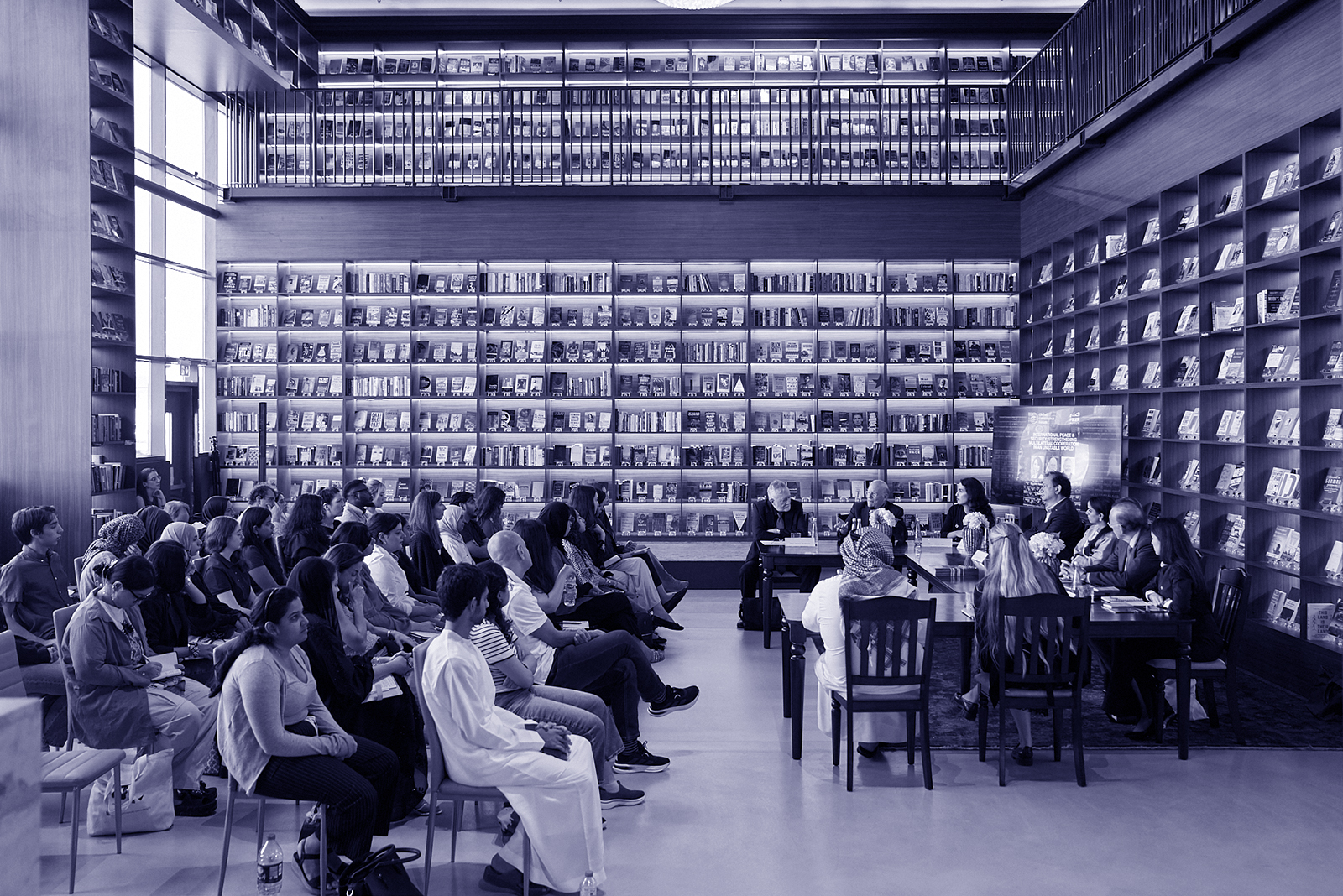
In October 2025, Fiker Institute, in collaboration with the Global Governance Forum, co-hosted a symposium under the theme “Reforming the UN Charter”. The symposium gathered experts to discuss ongoing debates on the influence of multilateral institutions and their role in strengthening international stability and security.
The discussions traced the historical evolution of the United Nations (UN) and its changing functions. The symposium also examined the current structure of the UN, which has often led to inaction and gridlock, precluding the organization from responding efficiently to emerging global crises and existential threats. Additionally, the growing influence of new global powers is not adequately represented within the organization, including perspectives from the Middle East.
Reforming the UN Charter would, therefore, ensure a more inclusive and democratic institution, better equipped to tackle complex contemporary challenges such as human rights, climate change, and conflict resolution. It would also enhance the organization’s capacity for decisive action and breaking deadlocks by enforcing stronger mechanisms for intervention and accountability.
KEY DISCUSSION POINTS
Session I: Rethinking Global Governance in the 21st Century
Speakers: Prof. Augusto Lopez-Claros & Prof. Tenia Kyriazi
The opening session examined whether a Charter written in 1945 can still anchor global governance in an era of climate emergency, renewed great power rivalry, and new technological and security risks. Prof. Augusto Lopez-Claros approached the question from a historical and political perspective, presenting a “Second United Nations Charter” as a concrete reform blueprint. Prof. Tenia Kyriazi complemented this with an international law perspective, outlining both the strict legal constraints on formal Charter amendment and the scope for change through evolving institutional practice.
Prof. Lopez-Claros revisited the 1945 San Francisco conference where the UN was established, recalling that a group of 17 states only accepted the UN Charter once Article 109 promised a review conference within ten years with the implicit promise to do away with the veto in the Security Council. That review never took place, leaving a foundational text that has not been comprehensively revisited despite profound changes in the international system. He argued that this unfulfilled promise has produced a growing mismatch between the Charter and current global risks. Existing arrangements have failed to reverse the rise in emissions after the Paris Agreement, nuclear arms control is eroding, and high debt, poverty, and inequality are undermining democratic resilience and fueling demagogues.
In response, he outlined the “Second United Nations Charter” project developed within the Global Governance Forum and a wider group of experts. The proposals cluster around three types of reform: First, legacy updates to the Charter to remove provisions that are clearly outdated, such as enemy state clauses and trusteeship language; second, normative updates to reflect issues that did not appear in the 1945 Charter, above all climate change, through proposals such as an Earth System Council that would coordinate global environmental policy, harmonize international environmental law, and oversee implementation of environmental treaties; third, structural changes such as the eventual creation of a UN Parliamentary Assembly and reforms to the Security Council to address the underrepresentation of many member states, including large countries like India, and the persistent use of veto powers by the permanent members that paralyses decision making. He also stressed the need to close the gap between human rights commitments and practice by strengthening institutions that can respond to systematic violations, rather than leaving rights as symbolic promises.
Prof. Kyriazi then examined what is legally and politically possible within the existing framework. She acknowledged that the UN is often criticized for gridlock and selective responses to crises but underlined that any serious reform debate must also recognize its achievements in supporting decolonization, expanding membership, and developing detailed human rights standards and mechanisms. Looking ahead, she argued that multilateral institutions need stronger tools to address shared challenges such as climate change, mass displacement, nuclear proliferation, pandemics, and the governance of artificial intelligence.
Prof. Kyriazi explained that formal Charter amendment faces very high hurdles, since Articles 108 and 109 require a two thirds majority in the General Assembly and ratification by all permanent members of the Security Council. However, she highlighted that meaningful change can also come from interpreting the Charter as a living instrument. This has occurred, for example, with the evolution of abstentions and absences by permanent members in the Security Council that can no longer block resolutions, the quiet disuse of enemy state clauses, the creation of international criminal tribunals under Chapter Seven, and initiatives that strengthen the role of the General Assembly. In her view, future Charter reform will likely depend on a combination of targeted amendments and such interpretive evolution, possibly supported by advisory opinions from the International Court of Justice.
Session II: International Peace and Security: Strengthening Multilateral Cooperation in an Unstable World
Speakers: Prof. Vernon Pedersen, Prof. Andrew Strauss, Prof. Patricia Rinaldi
This session examined what kind of multilateral system is needed to protect international peace and security in a fractured geopolitical landscape. Prof. Vernon Pedersen offered a historically grounded yet skeptical reading of the UN’s record, arguing that failures from Rwanda and Bosnia to Ukraine reveal structural flaws in the Charter. Prof. Andrew Strauss responded with proposals from the Second UN Charter for a citizen-based parliamentary body that would add legitimacy and soft enforcement to global decision making. Prof. Patricia Rinaldi brought in a Global South perspective, stressing that the UN remains indispensable while calling for a more holistic architecture that links peace to development, human rights, environmental limits, and disarmament.
Prof. Pedersen traced the genealogy of the UN back to the League of Nations, describing both organizations as brilliant ideas that, nonetheless, failed to prevent catastrophe. While recognizing landmark achievements such as the Universal Declaration of Human Rights and support for decolonization, he argued that these successes were enabled by shifts in underlying power rather than institutional design. In his view, the Security Council veto has left the UN largely paralyzed, citing its inability to prevent genocide in Rwanda, protect civilians in Bosnia, or stop Russia’s invasion of Ukraine. The problem, he argued, lies in the fact that states operate in an anarchic international environment and will act according to perceived self-interest unless they are physically constrained. On this basis, he called for dramatic reform, including the removal of the veto in favor of a weighted voting system and relocating UN headquarters from New York to a small, neutral state to reduce the leverage of any single power.
Prof. Strauss focused on how to make cooperation more enforceable without abandoning political realism. He presented the proposal for a United Nations Parliamentary Assembly as part of the Second Charter project. This body would sit alongside a reformed General Assembly, with members elected directly or indirectly through national parliaments. For the first time at the global level, representatives would form transnational coalitions based on ideas and interests rather than nationality. He argued that such a citizen-based institution would have high visibility and could exert soft enforcement through public scrutiny and moral authority. In the Second Charter proposals, the Parliamentary Assembly and General Assembly together could, in specific cases, override a Security Council veto. Additionally, in extreme, existential crises, they could adopt binding measures reviewed by the International Court of Justice.
Prof. Rinaldi stressed that for many Global South countries the issue is not whether to abandon multilateralism, but how to transform it, so that it delivers greater justice and solidarity. She noted that debates on peace and security are too often reduced to arguments over Security Council seats and great power rivalry. Instead, she encouraged participants to think in terms of a four-pillar UN. In the Second Charter vision, this means a reformed Security Council and a strengthened Economic and Social Council that reflects the link between development and peace. It also includes an upgraded Human Rights Council as a principal organ with stronger preventive tools, such as the Universal Periodic Review, and a new Earth Systems Council that anchors peace and security within the ecological limits of the planet. Prof. Rinaldi pointed to nuclear weapons free zones in Latin America and Africa as proof that disarmament is possible when it is driven from below. She also highlighted emerging coalitions of states, civil society and youth, including the Article 109 Coalition, as examples of how pressure from outside the permanent members can open space to renew the UN Charter and move towards more inclusive, preventive, and sustainable approaches to international peace and security.
Session III: Reassessing the Role of Multilateral Institutions in Conflict Prevention and Mediation
Speakers: Prof. Vesselin Popovski, Mahdi Ghuloom
This session examined how the UN can prevent mass atrocities and mediate conflicts in a world where the Security Council is often blocked by vetoes. Prof. Vesselin Popovski focused on structural problems in the UN Charter, especially the veto and permanent membership, and argued for stronger preventive tools and a greater role for regional actors. Mahdi Ghuloom turned to mediation practice, highlighting a global “mediation gap” in regional conflicts, the rise of Gulf entrepreneurial mediators, and the need to move from short term crisis management toward positive peace.
Prof. Popovski began by reframing the usual question “What does the UN bring to the table?” arguing that that the UN is the table, while member states are the actors. UN success or failure simply reflects their political will. He recalled that the veto was contested from the start and that Article 109 was included with the expectation that the Charter could be reviewed and potentially revised after ten years. From a constitutional perspective, he described the Charter as unusual because it concentrates power in the five victors of World War II through permanent seats and veto rights, instead of constraining the strongest states.
On prevention, Prof. Popovski argued that the main gap is the absence of a standing rapid reaction force that can deploy “like a fire brigade” when populations are at risk. He called for national or regional standby forces that could move quickly in extreme situations, building on earlier debates around the Responsibility to Protect and proposals in the Second UN Charter. At the same time, he emphasized that many UN organs already contribute to prevention through human rights monitoring, development work, and implementation of the Sustainable Development Goals, even if this work is less visible than peacekeeping. He also underlined the importance of regional organizations and neighboring states when the Security Council is paralyzed, pointing to past interventions that, while not always authorized by the Council, are now widely seen as having saved lives.
Mahdi Ghuloom then shifted the focus to mediation trends and the role of Gulf states. He noted that, despite the growth of mediation support units and budgets, many armed conflicts still receive no international mediation at all. A key factor, he argued, is the rise of Islamist conflicts and their close association with the ‘War on Terror,’ which makes states and organizations reluctant or legally unable to engage with listed groups. In this context, he highlighted how Gulf states have emerged as “entrepreneurial state mediators,” often talking to actors that multilateral institutions find harder to reach. Their familiarity with Islamist movements and regional political structures, combined with ties to the Western-led order, gives them unique access, even if their values and governance models do not fully align with liberal multilateral norms.
Ghuloom distinguished between negative peace, understood as the absence of direct violence, and positive peace, seen as long-term cooperation and reconciliation that address root causes of conflict. He argued that cooperation between entrepreneurial mediators and multilateral institutions should be guided by a shared focus on positive peace. In his view, Gulf mediators can use their access and political capital to secure early ceasefires and open channels, while the UN and other multilateral organizations are better placed to support inclusive post-conflict arrangements grounded in human rights, governance reform, and development.
Together, the two speakers suggested that reforming the UN’s role in conflict prevention and mediation will require both changes to the Charter’s power balance and more deliberate partnerships between regional and global actors.
The statements made and views expressed are solely the responsibility of the speakers and do not represent Fiker Institute. To read the full report, download the PDF.