Ceasefires in Crisis: Geopolitical Implications from Syria and Lebanon
INTRODUCTION
The architecture of ceasefire governance in contemporary conflicts reveals a fundamental transformation in the international system: the migration of conflict management from universal institutions toward selective coalitions of powerful states. The post-1945 international order vested conflict management authority in multilateral institutions, particularly the United Nations Security Council (UNSC). Under Chapter VII of the UN Charter, the UNSC possesses the authority to determine threats to peace (Article 39), authorize non-military measures including sanctions and embargoes (Article 41), and deploy military force through UN peacekeeping missions or authorized coalitions, if the former is deemed insufficient or inadequate (Article 42). While the permanent members of the UNSC—the victors of World War II—retain ultimate decision-making power over matters of international peace and security, this authority has for decades operated through multilateral channels and frameworks that constrain unilateral action.
However, contemporary ceasefire governance increasingly bypasses these multilateral structures. The actors may remain the same, but the institutional context has shifted dramatically: from dispersed authority operating through universal frameworks to concentrated power exercised through ad hoc coalitions. This transformation affects not merely the efficiency of conflict management but its fundamental character. Here, the world is witnessing the replacement of processes-oriented approaches toward conflict resolution with arrangements designed to advance particular strategic interests.
The consequences are visible across multiple theaters. In Syria, prior to Bashar al-Assad’s overthrow, the UN-led Geneva process became irrelevant as the Russia-Iran-Türkiye Astana format established de facto ceasefire zones. In Lebanon, the UN Interim Force in Lebanon (UNIFIL) has been effectively sidelined after nearly four decades of ceasefire monitoring, with responsibility transferred to a US-led ceasefire monitoring committee. Even where UN mechanisms formally persist, their authority has been hollowed out. The multilateral architecture persists as a symbolic facade while actual governance increasingly occurs through geopolitical arrangements that instrumentalize it at best or bypass it entirely.
This Essay examines the declining role of the UN in implementing and monitoring ceasefires across the Middle East, arguing that this reconfiguration of authority illustrates a broader erosion of the multilateral order. It argues that this crisis of ceasefires is constitutive of, rather than incidental to, the broader crisis of international authority. When ceasefire governance shifts from universal legal frameworks to power-based coalitions, enforcement becomes selective, violations are interpreted asymmetrically, and the objective transforms from sustainable peace to strategic advantage, resulting in large-scale geopolitical implications for the Middle East and beyond.
THE SHIFT FROM UN COMMAND TO AD HOC COALITIONS
Syria: The Astana Format’s Displacement of Geneva
Attempts to manage the Syrian conflict prior to the fall of the Assad regime exemplified the most complete displacement of multilateral authority. The UN-led Geneva process, initiated in 2012 through the Geneva Communiqué and backed in subsequent UNSC resolutions, was designed to facilitate political transition through comprehensive negotiations including the Syrian government, opposition groups, and international stakeholders.1 Despite producing lengthy communiqués, the Geneva process yielded no meaningful political settlement or effective ceasefires, largely because it combined an ambitious mandate (political transition) with weak enforcement and leverage over the main belligerents. Others argue that it was the fragmentation among opposition groups that reduced the prospects of a negotiated, implementable bargain, though undoubtedly various other explanations also remain relevant.
As military dynamics shifted, particularly after Russia’s intervention in 2015, the Astana format emerged as the effective governance mechanism for the Syrian conflict. Following major regime gains and the consolidation of front lines, Russia, Iran, and Türkiye launched negotiations in Kazakhstan’s capital Astana in 2016.2 Unlike in the Geneva Process, the Astana negotiators decided against attempting to pursue a comprehensive political transition and focused rather on stabilizing the battlefield through geographically-bounded ceasefires and guarantor-managed coordination that reflected the military realities on the ground in Syria. The three parties at Astana had direct coercive leverage in Syria: Russia provided crucial airpower and diplomatic cover for the Assad regime. Iran sustained networks of allied forces on the ground. Lastly, Türkiye combined support to armed opposition groups with cross-border military presence in Syria and border-security priorities. Astana functioned as a guarantor-managed process. Here, Russia, Iran, and Türkiye convened regular rounds and produced technical understandings that were implemented through their respective influence over local Syrian partners. The agenda emphasized operational conflict management, reducing violence in designated areas, negotiating local arrangements, and coordinating monitoring responsibilities.
The followers of the rules-based international order and active members of the multilateral system, including Western governments and UN officials, welcomed this shift in a tacit acceptance that a different approach was required. Scholars like Hellmüller argued that this reflected the emerging multipolar world order.3 Led by non-Western powers and without much contestation from the international community, the Astana process created some results, establishing “de-escalation zones” and ceasefire arrangements, effectively dividing Syria in a manner that reflected military realities.
Nevertheless, these arrangements violated multiple principles of international law. The de facto partitioning of Syria without consent from the internationally recognized government was unprecedented and unlawful and enabled sustained foreign military presence without national or UNSC authorization. Further, the arrangements created zones where humanitarian access and civilian protection depended on occupying powers’ discretion, rather than established legal frameworks.
The UN’s role became subordinate and legitimizing of the realities created by the Astana process. The UN Special Envoy coordinated with Astana guarantors but could not override their decisions. The Envoy would primarily make use of the format to track ceasefire dynamics and reduce the risk of wider escalation, while attempting to keep a political process alive through UN channels. In practice, the Envoy’s engage ment was reactive: Astana set the operational terms on the ground, and the UN adjusted its diplomatic and humanitarian activity to arrangements negotiated outside of UN channels. UN humanitarian agencies operated within Astana-defined parameters, requiring permission from controlling powers for access. The UNSC endorsed Astana’s outcomes through resolutions—such as UNSC Res. 2393 (2017) and 2401 (2018)—providing international legal cover for arrangements it did not negotiate and could not enforce.
This reflects a broader pattern of multilateral institutions increasingly functioning with a purpose to legitimize geopolitical arrangements, rather than to constrain power. The UN provides an international legal facade while actual governance occurs through coalitions of militarily dominant actors operating according to strategic logic.
Lebanon: UNIFIL’s Marginalization and the New Ceasefire Monitoring Architecture
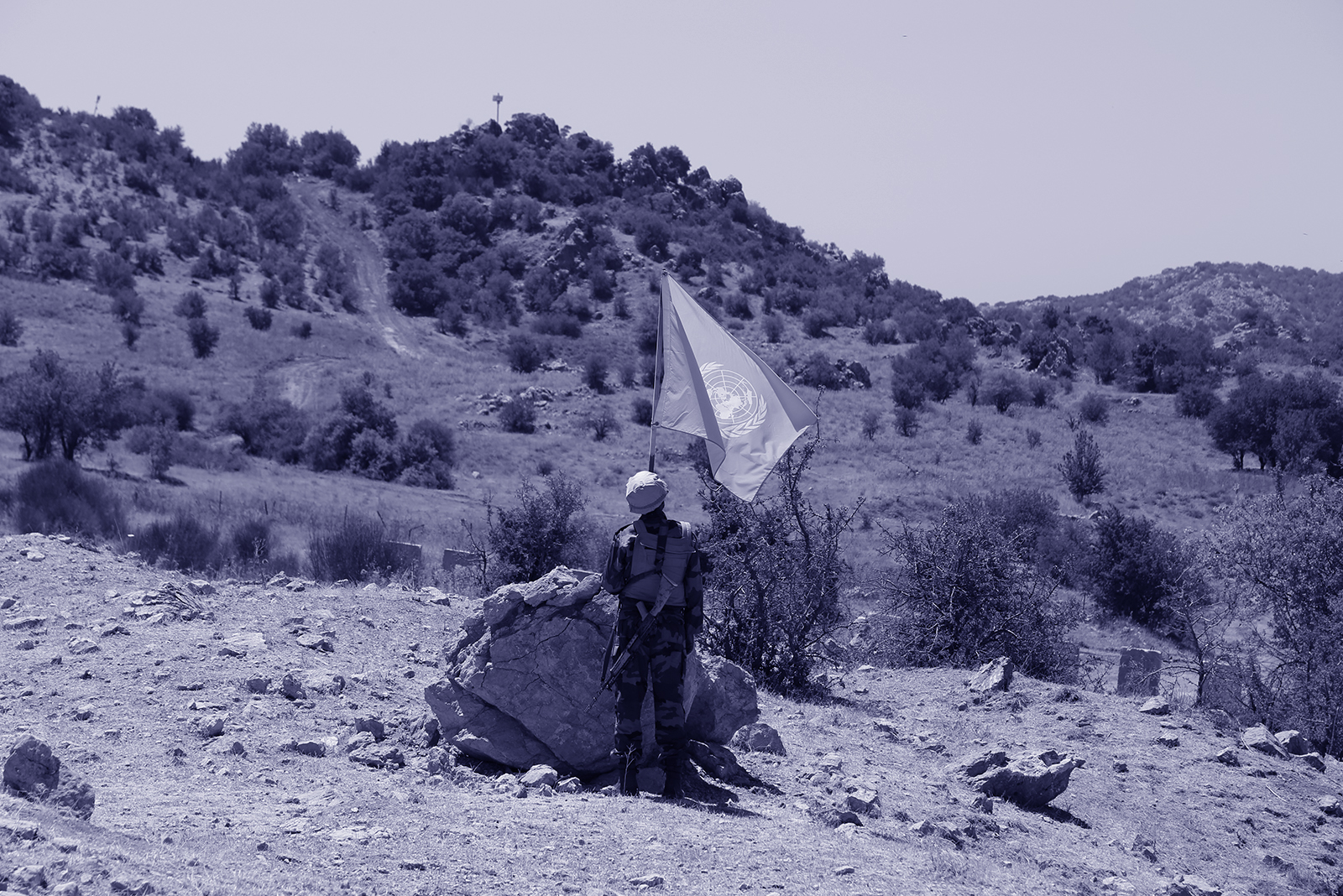
Lebanon’s case is particularly instructive because it represents the displacement of one of the UN’s longest-standing peacekeeping operations. UNIFIL was established in 1978 and has operated in southern Lebanon for over four decades.4 Its mandate has repeatedly been reconfigured in response to successive conflicts, most notably after the 2006 war, when UNSC Resolution 1701 significantly expanded its authority and deployment. It is noteworthy that following every ceasefire agreement that ended successive rounds of conflict between Israel and Lebanon over the last four decades, UNIFIL has been tasked with monitoring and upholding the terms of the ceasefire.
The November 2024 ceasefire, however, marked a critical departure. Rather than operating through UNIFIL or extending its mandate, the ceasefire monitoring mechanism has been delegated to the newly established Ceasefire Monitoring Committee chaired by the United States and including France. The committee convenes for the purpose of assessing progress on implementation and to address disputes where relevant. It largely reflects the geopolitical priorities of US containment of Hezbollah, French preservation of influence in Lebanon, and both states’ interest in providing security guarantees to Israel, amongst other strategic priorities.
UNIFIL remains deployed but has been effectively sidelined from primary monitoring and enforcement responsibilities. Simultaneously, the Tripartite Mechanism, comprising Lebanon, Israel, and UNIFIL, which is hosted by UNIFIL and was originally intended as a conflict resolution channel, has become largely dormant, meeting sporadically without substantive authority. The real conflict resolution channel is now the ceasefire committee.
Furthermore, UNIFIL, as a key historical multilateral forum for conflict resolution in the region, had already been sidelined by the establishment of the Military Technical Committee for Lebanon (the MTC4L) in March 2024. The committee is an Italian-led international body consisting of states including but not limited to the US, UK, France, Germany, and Spain. It supports the Lebanese Armed Forces (LAF) and the Lebanese state through capacity building, technical assistance, and humanitarian action to ensure stability in line with UN resolutions, especially concerning border security and UNIFIL’s mission in the South. Much of the MTC4L’s role has historically been under the mandate of UNIFIL.
This reconfiguration represents a fundamental shift in how ceasefire governance operates. Global powers now directly manage regional conflicts, shaping ceasefire terms to reflect their geopolitical priorities rather than working through multilateral frameworks. The result is a highly asymmetrical interpretation and enforcement of ceasefire obligations. Despite the ceasefire under the auspices of the Ceasefire Monitoring Committee, Israel has continued regular airstrikes and territorial incursions in Lebanon under the doctrine of ‘preemptive self-defense’ and with apparent impunity. This is not incidental but structural in coalition-based ceasefire governance. UNIFIL, despite its limitations, operated under a mandate from the UNSC with no veto by any permanent member. The new committee operates without such multilateral constraint and without the same level and degree of multinational and multilateral negotiations and bargaining.
The Lebanese case thus exemplifies how the shift from UN command to coalition management transforms ceasefire enforcement from a legal framework into a political instrument. Ceasefires no longer establish mutual obligations equally binding on all parties; they become mechanisms through which powerful states manage violence in ways consistent with their strategic interests while remaining seemingly unchallenged in the international rules-based system.
STRUCTURAL IMPLICATIONS: FROM CONFLICT RESOLUTION TO STRATEGIC MANAGEMENT
The displacement of multilateral authority in ceasefire governance produces three fundamental transformations in how international conflict management operates.
First, enforcement becomes selective and asymmetric. When coalitions of states with direct strategic interests in a conflict control monitoring mechanism, violations are interpreted through geopolitical lenses rather than legal standards. Actions by aligned parties are justified as necessary security measures, while identical actions by adversaries are condemned as violations. This selective enforcement undermines the legitimacy of ceasefire frameworks and incentivizes parties to seek powerful patrons rather than comply with agreements.
Second, the objective of ceasefires shifts from sustainable peace to temporary stabilization. Multilateral frameworks, despite their limitations, at least nominally pursue conflict resolution—addressing root causes, establishing legitimate governance, and protecting civilian populations. Coalition-managed ceasefires aim instead to freeze conflicts at strategically advantageous moments, manage violence at accept able levels, and maintain arrangements that serve patron interests. This transforms ceasefires from mechanisms of peace into instruments of strategic competition.
Third, international law becomes instrumentalized rather than authoritative. When powerful states bypass multilateral institutions, international legal frameworks persist primarily as rhetorical tools to criticize adversaries and legitimize the actions of allies. The law’s universal applicability dissolves, replaced by selective invocation determined by strategic considerations. This erosion of legal authority has implications far beyond ceasefire governance, suggesting a broader decomposition of the rules-based international order.
CONCLUSION: THE UNRAVELING OF MULTILATERAL AUTHORITY
The displacement of UN authority in ceasefire governance in Syria and Lebanon are not isolated adaptations to regional complexities but are symptomatic of a systematic transformation in how international conflict management operates. What emerges from these cases is a pattern of deliberate choice: powerful states, who have active membership as well as power at the multilateral level, increasingly prefer bilateral control over the multilateral consensus-building approach. There is a strong preference towards direct access to conflict parties over institutionally mediated negotiations and frameworks, where their strategic priorities rather than international legal norms determine outcomes.
The symbolic significance of this shift is perhaps most visible today in Lebanon, where UNIFIL’s mandate—one of the UN’s longest-standing peacekeeping operations—faces an uncertain future. In August of last year, UNIFIL’s mandate was extended for its final time until 31 December 2026. It is set to withdraw its forces from Lebanon by the end of 2027. The withdrawal of UNIFIL from southern Lebanon will mark more than the end of a specific mission; it will represent the UN’s retreat from a conflict zone it has monitored for nearly five decades, leaving a vacuum to be filled by coalition-based mechanisms (the Ceasefire Monitoring Committee, the MTC4L, and other initiatives) that operate outside multilateral constraints.
This trend extends beyond the Middle East. The broader pattern is unmistakable: no new UN peacekeeping operations have been established since 2014, while existing missions face increasing marginalization or withdrawal. The Astana format and Lebanon’s Ceasefire Monitoring Committee are not anomalies but harbingers of a post-multilateral order where conflict management increasingly occurs through selective coalitions rather than universal institutions.
The practical implications are profound. Reduced regional and multilateral solutions in the region means less neutral monitoring, fewer mechanisms for accountability, and diminished protection for civilian populations caught in conflicts. The erosion of multilateral frameworks removes crucial constraints on state behavior, making violations easier to justify and harder to challenge through established international legal channels.5 As scholar G. John Ikenberry stresses, international institutions restrain powerful states by imposing costs for exiting them and providing guarantees to weaker states that the bigger powers will follow through on their commitments.6 Yet states engaging in ad hoc coalitions are not necessarily seen as exiting the multilateral order. Firstly, because these mechanisms typically emerge after failed or troubled multilateral attempts, they generate a degree of openness, or even curiosity, among states to consider alternatives. More importantly, because they do not constitute direct attacks, they remain below the threshold of what member states perceive as deliberate challenges to the multilateral order. As a result, many states do not interpret these coalitions as intentional challenges to multilateralism, but rather as pragmatic stopgaps in moments of institutional paralysis or conflicting interests.
Exceptions to this trend persist, and the multilateral order is not yet fully sidelined. Several ceasefire arrangements and a vast array of conflict management responses still occur at the multilateral level. The recent Gaza ceasefire resolution, with its compre hensive 20-point implementation plan, demonstrates that multilateral frameworks can still deliver meaningful agreements when great-power interests align. Such moments, however, increasingly stand out as exceptions that prove the rule: multilateral institutions retain authority only when powerful states choose to act through them.
The crisis of ceasefire governance thus reflects a broader reckoning with the architecture of the international order itself. The question is no longer whether multilateral institutions can effectively manage contemporary conflicts, but whether the international community will permit the complete erosion of the multilateral constraints that, however imperfectly, have shaped conflict governance for eight decades. The Middle East’s ceasefire landscape offers a preview of what a post-multilateral order might entail. Whether this transformation represents a pragmatic adaptation to multipolarity or a dangerous regression toward the pre-1945 patterns of unconstrained power politics, remains to be seen.
The statements made and views expressed are solely the responsibility of the author, and do not represent Fiker Institute. To access the endnotes, download the PDF.